
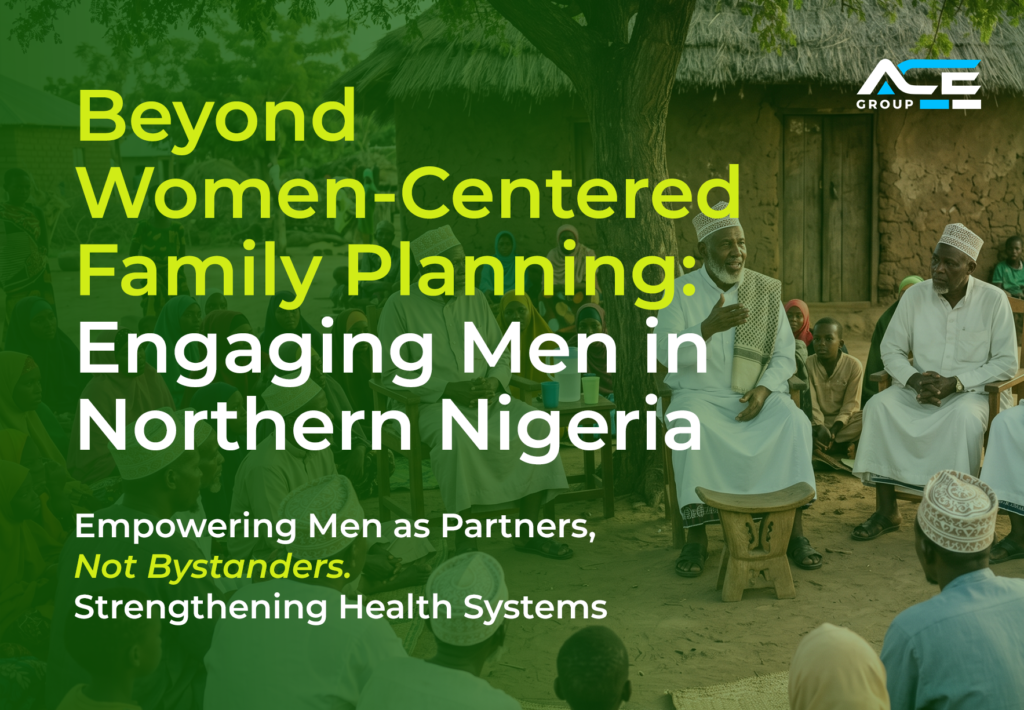
Sustainable progress in reproductive health is achieved not from medicalising the female body alone, but from empowering men to be equal partners in the plan.”
For decades, family planning and reproductive health programmes in Northern Nigeria have been designed almost exclusively around women. While women undeniably bear the physical realities of pregnancy, this single focus approach leaves a critical gap: men. In communities where a husband’s approval often determines whether his wife can access any health service, excluding men from the equation does not protect women rather it limits them. As we work to strengthen health systems across Nigeria, it is time to bring men fully into the conversation.
Why Men Matter in Reproductive Health
In many communities across states like Kano and Kebbi, spousal consent remains a significant determinant of whether a woman seeks care. Research shows that many women cannot access even basic health services without explicit permission from their husbands. In households with multiple wives, a recognized marital structure in Northern Nigeria this dynamic is even more pronounced.
This reality is not a barrier to work around; it is a pressure point to work with. When men are equipped with knowledge, engaged as partners, and made to feel that reproductive health is their responsibility too, outcomes improve not just for women, but for entire households and communities.
Practical Pathways to Engage Men in Health Systems
Several tested approaches have already shown promise in bringing men into the health system:
- Community-Based Male Engagement: Initiatives like “Mai Shayi” advocates in Bauchi and “Husband Schools” in Niger Republic have demonstrated that reaching men in spaces they already frequent like markets, mosques, community centers is far more effective than waiting for them at clinic doors.
- Religious and Traditional Leadership: Emirs in Kebbi and Imams in Kano have used Friday sermons to dispel myths and encourage husbands to actively support their wives’ health decisions. These “Male Champions” carry a cultural authority that no health worker alone can replicate.
- Integrated Service Delivery: When primary healthcare centres offer men entry points for their own health needs, screening for STIs, HIV, hypertension, and other conditions they routinely ignore, clinics become relevant spaces for men, not just for the women and children in their households.
- Expanding the Contraceptive Method Mix: Beyond condoms and vasectomy, ongoing advances in male contraception including hormonal gels currently in clinical trials offer the promise of broader male-controlled options in coming years. Preparing health workers and communities now will ensure uptake when these methods become available.
A Shared Responsibility, A Stronger System
Health systems strengthening is about making every building block work in harmony. Workforce capacity, service delivery, and community demand are all weakened when half the adult population is treated as a passive bystander. Surveys across Sub-Saharan Africa show growing male interest in shared family planning responsibility, driven in part by the economic pressures of raising larger families. The evidence and the demand are there. What remains is the deliberate policy and programme decision to meet men where they are, speak to them in language that resonates, and hold them accountable as partners in the health of their families. Strengthening Northern Nigeria’s health system requires us to leverage every cultural asset we have, including the authority and influence of men. When men lead alongside women, the entire system becomes more resilient.
Call to Action
Policymakers, programme designers, and community leaders must work together to ensure that men are not just permitted in reproductive health spaces, but actively welcomed, educated, and engaged. It is time to stop treating family planning as “women’s business” and start treating it as a shared human priority.