
Context and Rationale
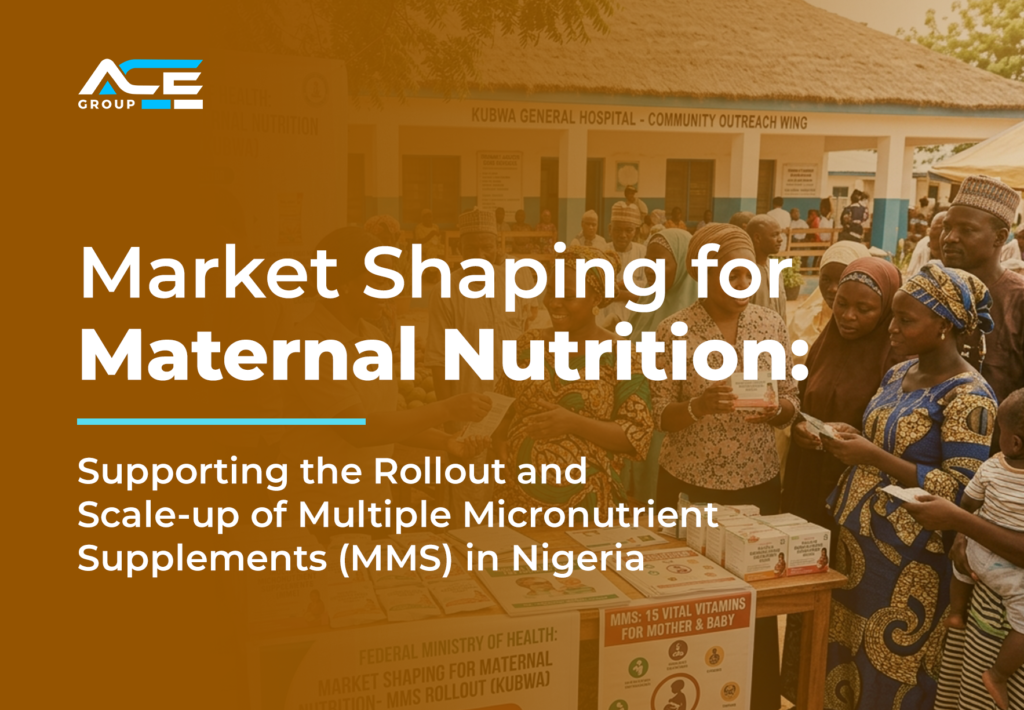
Maternal anemia and undernutrition remain major contributors to poor pregnancy outcomes in Nigeria, increasing the risk of low birth weight, preterm birth, and maternal complications. For many years, iron and folic acid (IFA) supplementation has been the standard of care during antenatal visits. However, growing global evidence and guidance from World Health Organization (WHO) supports the use of Multiple Micronutrient Supplements (MMS); a single daily tablet containing 15 essential vitamins and minerals as a more effective intervention for improving maternal and newborn health.
Introducing MMS into Nigeria’s health system is not simply a matter of replacing one commodity with another. It requires creating conditions for sustainable financing, reliable supply chains, coordinated implementation, and government ownership. Between January 2024 and December 2025, our team supported Results for Development (R4D) in providing technical assistance to the Government of Nigeria at both the national and subnational levels (Kaduna and Kano) to lay the foundation for the sustainable rollout and scale-up of MMS.
Why Market Shaping Matters for MMS
Successfully introducing a new maternal health commodity requires more than procurement, it requires a functioning market. Manufacturers also need confidence that demand will exist before investing in production. Governments need sustainable financing before committing to procurement. State health systems require clear implementation plans before a product can consistently reach pregnant women attending antenatal visits at health care centers.
In Nigeria, procurement and distribution of MMS are currently led by UNICEF, using products supplied by manufacturers accredited to the UNIMAP standard. While this provides an important starting point, long-term sustainability will depend on strengthening domestic systems, including supporting local pharmaceutical manufacturers to meet quality standards and creating an enabling environment for local production.
At the same time, other implementing partners supported other thematical advocacy, demand generation, and health worker capacity building to promote the appropriate use of both IFA and MMS. Our engagement specific was tailored around shaping the market conditions that would allow MMS to move from a promising intervention to a sustainably financed, state-led rollout program and addressing supply chain, domestic resource mobilization (DRM), and domestic resource financing (DRF) challenges in both states, which carry a significant burden of maternal anemia and among the highest need for strengthened antenatal nutrition services.
Building the Foundation for Sustainable Scale-Up
Our support specifically focused on strengthening the systems needed to transition MMS from a promising intervention to a government-owned programme. This included addressing challenges related to domestic resource mobilization, financing, implementation planning, and supply chain management in Kaduna and Kano States. Several key interventions helped establish this foundation:
- Stakeholder Mapping and Coordination
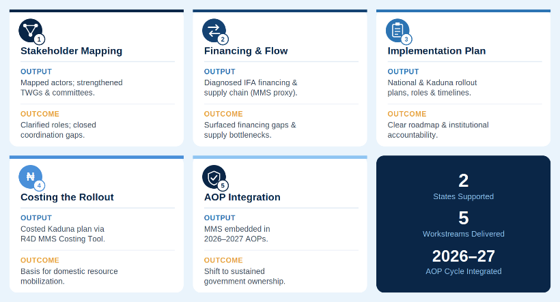
We mapped government institutions, development partners, civil society organizations, and private-sector actors supporting maternal and child health across Kaduna and Kano States. This exercise clarified stakeholder roles, identified coordination gaps, and established a stronger platform for joint planning and implementation (Technical Working Groups and State Committees on Food and Nutrition)
- Assessing Domestic Financing and Commodity Flow
Using iron and folic acid supplementation as a proxy, we conducted diagnostic assessments to understand how maternal nutrition commodities are currently financed, procured, distributed, and delivered through the health system. The findings highlighted existing financing gaps and supply chain bottlenecks that could also affect MMS rollout if left unaddressed.
- Developing Implementation Plans
Working with national and state stakeholders, we supported the development of implementation plans for MMS rollout and scale-up. These plans outlined practical actions, responsible MDA/Agency, timelines, and resource requirements across key areas including policy and regulation, procurement, supply chain management, service delivery, health worker training, demand generation, advocacy, and monitoring and evaluation.
- Costing the Rollout and scale-up plans:
Implementation plans are only useful when backed by realistic budgets. We further developed detailed costed plans for Kaduna State, providing policymakers and programme managers with the information needed to mobilize domestic resources and integrate MMS into routine government financing.
- See link to R4D MMS Costing Tool
- Integrating MMS into the Health Annual Operational Plan (AOP)
To strengthen sustainability, we supported the integration of MMS activities and costs into the 2026–2027 Annual Operational Plans (AOPs). This represents an important shift from donor-supported introduction toward routine government planning and budgeting, helping to position MMS as part of Nigeria’s long-term maternal nutrition programme rather than a standalone project.
Looking Ahead
With implementation plans completed, rollout and scaleup costs estimated, and MMS integrated into state Annual Operational Plans, the next phase focuses on execution. Success will depend on translating these plans into action through strengthened procurement systems, improved commodity availability, continued health worker capacity building, effective monitoring, and sustained domestic financing. Strengthening maternal nutrition requires more than introducing a new supplement, it requires strengthening the systems that deliver it. Through coordinated planning, sustainable financing, and strong partnerships, Nigeria is taking important steps toward ensuring that more pregnant women receive the nutrition they need for healthier pregnancies and healthier babies.