
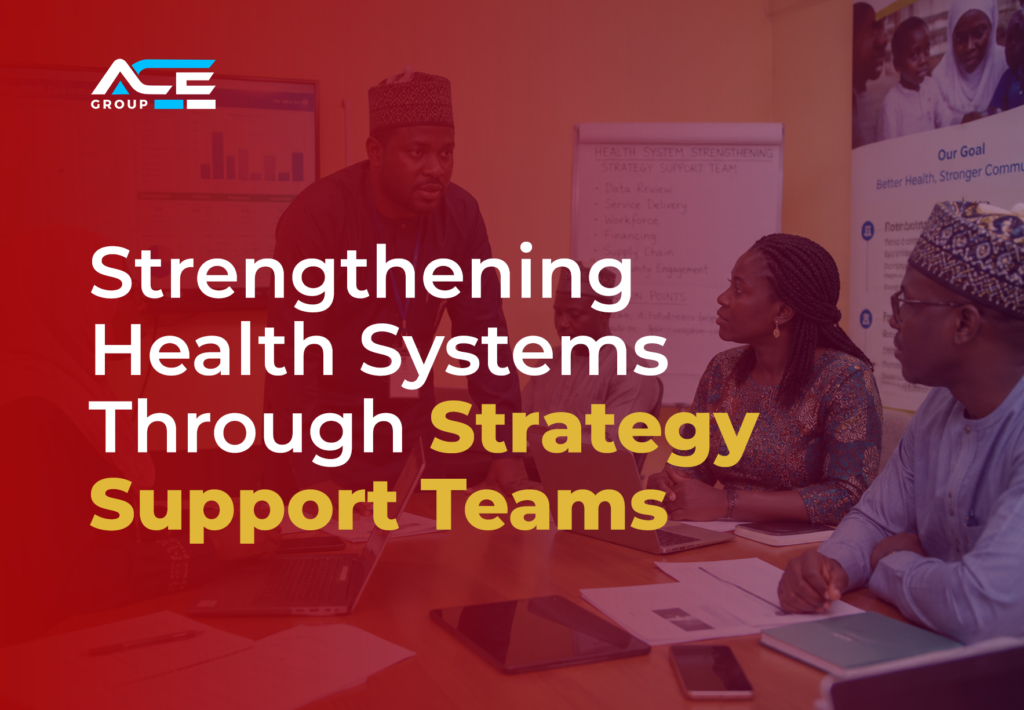
One of the greatest challenges in public sector reform is not the development of good strategies, it is ensuring that those strategies are effectively implemented. Across many government institutions, well-designed policies and ambitious plans often struggle to translate into measurable outcomes due to fragmented coordination, weak accountability mechanisms, competing priorities, and limited execution capacity.
Working as part of the team at ACE Strategy & Consults, I have had the privilege of supporting the National Primary Health Care Development Agency (NPHCDA) in addressing this challenge through the Strategy Support Team (SST) model. What began as a technical assistance intervention has evolved into a practical demonstration of how embedded execution support can strengthen government systems while preserving government ownership.
Moving Beyond Traditional Technical Assistance
Traditional technical assistance often focuses on providing expertise or delivering isolated interventions. While valuable, these approaches do not always address the systemic barriers that prevent strategies from being implemented effectively.
The Strategy Support Team model takes a different approach.
Rather than creating a parallel implementation structure, the SST is embedded within the NPHCDA, working alongside agency leadership, programme directors, and implementing partners to strengthen coordination, improve execution discipline, and establish accountability mechanisms that accelerate delivery of priority health initiatives.
This approach recognizes that sustainable results come from strengthening institutions—not replacing them.
Building an Execution Engine Within Government
Through our technical support, ACE has helped establish systems that enable the Agency to move from planning to execution with greater speed and coordination.
The SST serves as an execution engine by supporting programme planning, monitoring implementation, coordinating multiple stakeholders, facilitating evidence-based problem solving, and ensuring that emerging bottlenecks are identified and resolved before they become major obstacles.
This has created a structured environment where government departments, development partners, and implementing partners work from shared priorities, common workplans, and standardized performance monitoring systems.
Instead of fragmented implementation, the Agency now benefits from stronger alignment around national priorities.
Strengthening Accountability Through Better Coordination
One of the most valuable lessons from this engagement has been that accountability is strengthened when performance becomes visible.
The SST introduced structured governance mechanisms, including regular leadership review meetings, standardized implementation dashboards, routine workstream sessions, and collaborative problem-solving forums. These mechanisms have improved transparency around programme progress while enabling faster decision-making by Agency leadership.
Equally important, they have fostered a culture where implementation challenges are discussed openly and resolved collectively rather than remaining hidden until programme reviews.
Creating Sustainable Institutional Capacity
Perhaps the most rewarding aspect of this work has been seeing technical assistance evolve into institutional capacity strengthening.
Beyond supporting implementation, the SST model invests heavily in knowledge management, continuous learning, and capacity building. Through structured coaching, technical workshops, performance reviews, and learning sessions, government teams are increasingly equipped with the skills and systems needed to sustain improvements beyond donor-funded interventions.
This emphasis on institutional learning is what differentiates the model from conventional project management support.
Developing a Practical Guide for Replication
One of the outcomes of our work has been the development of the Strategy Support Team Operational Playbook—a practical guide that captures the lessons, governance structures, operating procedures, and implementation tools that have emerged from supporting the NPHCDA.
Rather than serving as a rigid manual, the playbook provides a flexible framework that Ministries, Departments, and Agencies can adapt to their own contexts. It outlines practical guidance on establishing Strategy Support Teams, designing governance structures, coordinating partners, managing performance, building institutional capacity, and institutionalizing learning.
By documenting these experiences, we hope to support wider adoption of delivery-focused approaches across sectors where implementation remains a critical challenge.
Looking Ahead
As governments continue to manage increasingly complex development priorities alongside multiple development partners, the ability to coordinate effectively and execute consistently will become even more important.
The experience of supporting the NPHCDA demonstrates that strengthening execution does not necessarily require creating new institutions. Instead, it requires building systems that improve coordination, enhance accountability, support evidence-based decision-making, and empower government teams to deliver on their mandates.
At ACE Strategy & Consults, we remain committed to designing and implementing practical solutions that strengthen public institutions from within. The Strategy Support Team model reflects this commitment, helping government move beyond strategy development to measurable impact, while ensuring that ownership, leadership, and sustainability remain firmly embedded within the institutions we serve. As we continue supporting government partners across Nigeria, our focus remains clear: transforming strategy into results that improve lives.